
Last Updated on October 2, 2026 by Solar Whiz
The World Meteorological Organisation has put the odds of a moderate-to-strong El Niño developing this year as high as 80–90%, and the Bureau of Meteorology has already confirmed it’s underway — with forecasters warning it could be among the strongest events in decades. Social media has already nicknamed it the “Godzilla El Niño.” Whatever you call it, if you live under an Australian roof, this is the year to think seriously about what’s happening in your roof space when the mercury climbs.
Here’s what the science actually says, what it means for your home, and the one upgrade that makes the biggest difference to how your house copes with the heat. (This isn’t the first time we’ve flagged a BoM heat warning — see our coverage of the 2023–24 El Niño for how that event played out.)
What Is a “Super El Niño” — and Is It Actually Coming?
El Niño is a natural warming of the central Pacific Ocean that reorganises weather patterns worldwide — weakening trade winds, shifting rainfall systems, and typically pushing global and Australian temperatures higher. The Bureau of Meteorology declared El Niño active in mid-2026, with current forecasts showing it’s likely to persist well into the back half of the year before peaking over summer and easing in early 2027.
That timing matters: it puts the strongest heat signal right over an Australian summer.
But — and this is worth knowing before you panic — a bigger El Niño doesn’t automatically mean a bigger drought or a hotter summer for every part of the country. University of Melbourne climate researcher Dr Mandy Freund has pointed out that the link between El Niño’s strength and its actual impact on Australian rainfall is historically weak; some of the strongest events on record have delivered close-to-average conditions in large parts of the country. El Niño is a genuine risk factor worth preparing for, not a locked-in forecast of disaster.
What is consistent across El Niño years, though, is an increased risk of heatwaves and extreme temperature days — and that’s the part that hits your home directly, regardless of whether the rain forecast pans out.
Why the Heat Hits Harder Inside Your Roof Space?
Australian summers already push roof space temperatures well above outside air temperature — a dark tiled or metal roof in direct sun can turn a poorly ventilated cavity into a space hotter than most ovens’ lowest setting. During a heatwave-heavy El Niño summer, that heat has nowhere to go without proper airflow. It radiates down into ceiling insulation, pushes up the temperature of the rooms below, and forces your air conditioner to work harder just to hold steady — which shows up directly on your power bill.
This is the quiet cost of El Niño that doesn’t get talked about as much as drought and bushfire risk: more hot days means more days your roof space is silently working against your cooling system instead of with it.
The Real Fix Isn’t Cranking the Aircon
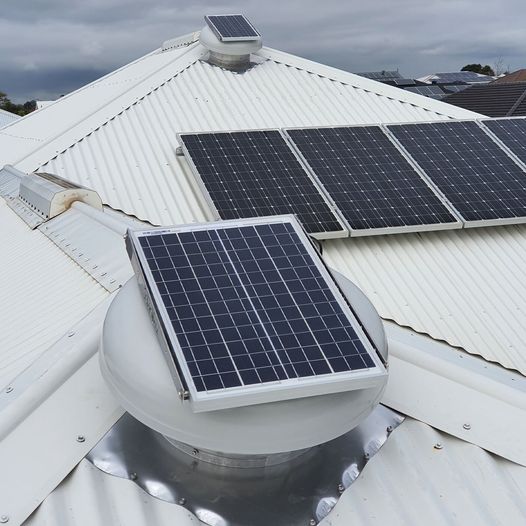
Cranking the air conditioner treats the symptom, not the cause — if heat is building up in your roof space faster than it can escape, your aircon is fighting a losing battle every hot day, and a Super El Niño summer just means more of those days back-to-back.
Solar Whiz residential units move up to 23× the airflow of a standard whirlybird, which is exactly why we’ve covered this in detail before — read our full breakdown on staying cool without cranking the air conditioner. For the deeper technical comparison on what actually moves the needle in a roof space, see our insulation vs. ventilation guide.
If you’re in a bushfire-prone area, it’s also worth knowing Solar Whiz offers BAL-rated roof ventilators, designed to meet Bushfire Attack Level compliance without sacrificing airflow. See our guide to bushfire-rated roof vents.
Running a Shed, Warehouse, or Commercial Facility? Here’s a Different Heat Problem
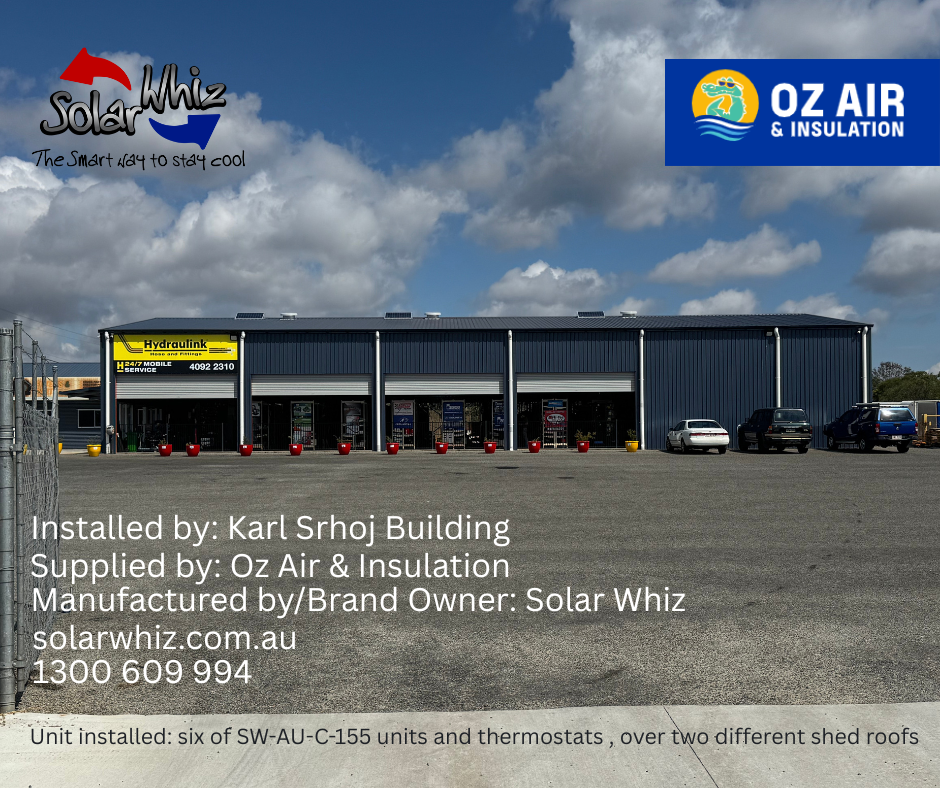
Commercial and industrial spaces face their own version of this issue — and it’s not the same fix at the same scale, so it’s worth treating separately. A hot shed, warehouse, or facility roof doesn’t just cost money in cooling; it creates real heat-stress risk for staff and can damage heat-sensitive stock or equipment.
Commercial Solar Whiz systems deliver up to 4× the airflow of a standard commercial whirlybird, sized and specified differently to residential units to handle larger roof spans and heavier heat loads. If a Super El Niño summer means more high-heat working days on the roster, ventilation capacity — not just extra pedestal fans on the floor — is the upgrade that actually reduces the risk.
For commercial facilities in bushfire-prone zones, Solar Whiz also offers BAL-rated commercial roof ventilators, built to meet the same Bushfire Attack Level compliance requirements as our residential units, without compromising airflow across larger commercial roof spans.
Frequently Asked Questions
What does El Niño mean for Australia?
El Niño typically brings a higher chance of below-average rainfall and above-average temperatures to eastern Australia, along with an increased risk of heatwaves and bushfire danger. The severity varies significantly between events, so it’s a risk factor to prepare for rather than a guaranteed outcome.
Is El Niño wet or dry?
In Australia, El Niño years are historically associated with drier-than-average conditions, particularly across the eastern states — though rainfall impact varies a lot between individual events and isn’t guaranteed for every region.
What is a "Super El Niño"?
“Super El Niño” (also called “Godzilla El Niño” in media coverage) refers to an unusually strong El Niño event, where Pacific Ocean warming and its downstream weather effects are more intense than a typical occurrence. The term describes strength, not a different type of event.
How do I keep my house cool in summer without running the aircon constantly?
Improving roof ventilation is one of the most effective steps, since it removes trapped heat before it radiates into your living space, reducing how hard your air conditioner has to work. Combining ventilation with adequate ceiling insulation gives the best result.
Get Ahead of This Summer
A Super El Niño doesn’t guarantee disaster, but it does mean more hot days where your roof space is working against you instead of for you. The fix isn’t more air conditioning — it’s making sure the heat has somewhere to go.
Get a free Solar Whiz quote and find out how much heat your current roof setup is holding onto — before the peak of summer arrives.