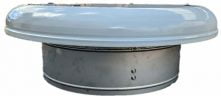

If you’re researching alternatives to Solar Whiz, you’ve probably come across a few different brands — SolarArk, SolarBright, SolarKing, CSR Bradford, Ampelite, Vent-A-Roof, Skydome, and SolarVenti all get mentioned in the same breath. But not all of these products actually do the same job, and airflow numbers alone don’t tell the full story.
Some are solar-powered active systems like Solar Whiz. Others are passive vents with no motor at all. A couple run on mains power rather than solar. And one doesn’t extract hot air from your roof at all — it does the opposite. Below is a straightforward, fact-checked comparison of each one, with real manufacturer specs, so you can see exactly what you’re comparing before you buy.
Table of Contents
- How We Sourced This Data
- Quick Comparison Table
- Why We’re Comparing These Brands
- Brand-by-Brand Comparisons
- Solar Whiz vs SolarArk
- Solar Whiz vs SolarBright (MaxBreeze)
- Solar Whiz vs SolarKing
- Solar Whiz vs CSR Bradford Airomatic
- Solar Whiz vs CSR Bradford SolarXVent
- Solar Whiz vs Ampelite Spinaway
- Solar Whiz vs Ampelite iSwirl
- Solar Whiz vs Skydome PowerVent SMV300
- Solar Whiz vs Skydome Solar PowerVent
- Solar Whiz vs Vent-A-Roof
- Solar Whiz vs SolarVenti
- Running Costs: Solar vs Mains-Powered
- Which Option Suits Your Climate?
- Warranty & Support Comparison
- Frequently Asked Questions
- Which Solar Whiz Alternative Is Right for You?
How We Sourced This Data
Every figure in this guide comes directly from each manufacturer’s own product pages, official spec sheets, or matching listings from multiple independent Australian retailers — not estimates or rounded approximations. Where a brand’s power source, product category, or warranty terms weren’t publicly confirmed, we’ve said so directly rather than filling the gap with a vague description. Where a competitor outperforms Solar Whiz on a specific spec, we’ve included that too. The goal here is an accurate reference, not a sales pitch.
Quick Comparison Table
| Brand / Model | Type | Airflow (m³/h) | Night Operation | Warranty |
|---|---|---|---|---|
| Solar Whiz SW-AU-R-28 | Solar-powered, active (residential) |
1,700 | Optional (N-OPS/CCM accessory) | 10yr panel / 2yr motor |
| Solar Whiz SW-AU-R-40 | Solar-powered, active (residential) |
2,300 | Optional | 10yr panel / 2yr motor |
| Solar Whiz SW-AU-C-155 | Solar-powered, active (commercial) |
10,000 | Optional | 10yr panel / 2yr motor |
| SolarArk SAV-10T | Solar-powered, active (residential) |
1,112 | Not stated | 5yr panel / 5yr motor* |
| SolarArk SAV20/SAV20T | Solar-powered, active (residential) |
2,718 | Not stated | 10yr panel / 5yr motor* |
| SolarArk SAV40T | Solar-powered, active (commercial) |
3,660 | Not stated | 10yr panel / 5yr motor* |
| SolarArk SAV-60T | Solar-powered, active (commercial) |
5,250 | Not stated | 10yr panel / 5yr motor* |
| SolarArk SAV-120-S-240 | Solar-powered, active (commercial) |
11,220 | Not stated | 10yr panel / 5yr motor* |
| SolarBright MaxBreeze MB400 | Solar-powered, active (residential) |
2,200 | Optional (battery/AC accessory) | 10yr panel / 5yr motor* |
| SolarKing 320mm V4 | Solar-powered, active (residential) |
2,100 | Optional (240V power pack) | 3-year warranty |
| SolarKing 320mm V4 wireless | Solar-powered, active (residential) |
2,100 | Optional (240V power pack) | 3-year warranty |
| SolarKing 600mm V3 wireless | Solar-powered, active (commercial) |
10,000 | Optional (240V power pack) | 3-year warranty |
| CSR Bradford Airomatic | Mains-powered (not solar) (residential) |
647 | Yes (mains) | 2-year warranty |
| CSR Bradford solarxvent | Solar-powered, active (residential) |
150 | Not stated | 2-year warranty |
| Ampelite Ampelair Spinaway | Passive, wind-driven (residential) |
No fixed rating (wind-dependent) | N/A | 10-year warranty |
| Ampelite iSwirl | Wind + Solar (residential) |
No fixed rating | Yes (wind) | Not stated |
| Skydome PowerVent SMV300 | Mains-powered (not solar) | 800 | Yes (mains) | Not stated |
| Skydome Solar PowerVent | Solar-powered, active (residential) |
Not stated | Not stated | 10-year warranty |
| Vent-A-Roof | Passive, concealed ridge vent (no fan/motor) | No fixed rating | N/A | Not confirmed |
| SolarVenti SV14 | Solar-powered, but heats/introduces air | 60–110 | No | 5yr |
| SolarVenti SV30 (largest residential) | Solar-powered, but heats/introduces air | 200 (max) | No | 5yr |
*All figures in this table have been manually cross-checked directly against each manufacturer’s own website.
Why We’re Comparing These Specific Brands
These are the names that keep coming up when people search for Solar Whiz alternatives. Rather than just listing them, we’ve pulled real specs from each manufacturer’s own site or verified retailer listings — including the numbers that don’t favour Solar Whiz. If a product isn’t actually a fair comparison (different power source, different function entirely), we say so directly instead of blurring the lines.
Solar Whiz vs. SolarArk
SolarArk is the closest competitor on this list — a solar-powered, active extraction system across a comparable range of sizes, from residential through to large commercial installations. Their SAV20/SAV20T delivers 2,718 m³/h and is designed for north-facing residential roofs, while the SAV20T variant suits east, west, and south-facing installations. The SAV40T moves 3,660 m³/h, and the SAV-60T reaches 5,250 m³/h with a 60W panel and digital thermostat control, adjustable before installation.
At the top end, SolarArk’s SAV-120-S-240 is rated at 11,220 m³/h — higher than Solar Whiz’s largest commercial unit (10,000 m³/h). We’re not going to hide that. SolarArk also backs the SAV-60T with a 10-year panel and 5-year motor warranty, a longer motor warranty than Solar Whiz’s 2-year.
Where Solar Whiz holds an edge is in local support and being designed and manufactured specifically for Australian roof and climate conditions across the full product range, with a consistent warranty structure at every tier rather than warranty terms that vary model to model. Solar Whiz also offers stainless steel and BAL-rated (Bushfire Attack Level) options for bushfire-prone and coastal installations — a level of climate-specific customisation not published in SolarArk’s range.
Solar Whiz vs. SolarBright (MaxBreeze)
SolarBright’s MaxBreeze MB400 delivers 2,200 m³/h, comparable to Solar Whiz’s mid-range residential unit (SW-AU-R-40 at 2,300 m³/h). SolarBright offers an optional battery or AC backup accessory for night operation, similar in concept to Solar Whiz’s N-OPS/CCM accessory, and their MaxBreeze Plus variant adds a built-in humidistat for automatic moisture-triggered operation.
Solar Whiz’s advantage here goes beyond scale — every Solar Whiz unit can be fitted with a thermostat (fixed or adjustable between 10°C and 30°C) or a hygrostat for moisture and condensation control, available as a standard option across the range rather than limited to a single variant. Solar Whiz also scales up to a 10,000 m³/h commercial unit with no direct equivalent in SolarBright’s residential-focused range, making it the more practical choice for warehouses, factories, and larger commercial spaces.
Solar Whiz vs. SolarKing
The SolarKing 320mm V4 moves 2,100 m³/h, with an optional 240V power pack for continued night-time operation. SolarKing also produces a commercial unit — the 600mm SRVF V3 — rated at 10,000 m³/h, matching Solar Whiz’s largest commercial unit exactly. It includes a thermostat (automatic shutoff below 25°C) and the same optional power pack for night-time operation, plus corrosion-resistant construction suited to coastal regions.
Where Solar Whiz holds a genuine edge: a hygrostat option for moisture and condensation control (not published in SolarKing’s range), and stainless steel and BAL-rated (Bushfire Attack Level) options for bushfire-prone areas. On warranty, it’s a mixed picture worth stating plainly — Solar Whiz’s 10-year panel warranty is well ahead of SolarKing’s blanket 3-year warranty, but SolarKing’s 3-year term covers the whole unit including the motor, while Solar Whiz’s motor warranty is 2 years.
Solar Whiz vs. CSR Bradford (Airomatic)
Worth flagging clearly: the CSR Bradford Airomatic is a mains-powered unit, not solar. At its highest speed it moves 647 m³/h — notably lower than even Solar Whiz’s smallest residential model of 1,700 m3/hr. Because it runs on mains power, it can operate at night without an accessory, but it also means ongoing electricity costs that a solar system doesn’t have.
Solar Whiz vs. CSR Bradford (SolarxVent)
Bradford’s SolarXVent is a genuinely solar-powered active ventilator, unlike its sibling product Airomatic, which runs on mains power. It’s purpose-built for small roof spaces like sheds and garages, with a compact 10W solar panel and a 120mm brushless DC fan.
Its maximum flow rate is 150 m³/h — a fraction of even Solar Whiz’s smallest residential unit (~1,700 m³/h). SolarXVent isn’t designed to compete at the same scale; it’s a practical option for a garden shed or small garage, but not a realistic alternative for whole-house or commercial roof ventilation.
Solar Whiz vs. Ampelite Ampelair (Spinaway)
Ampelair’s Spinaway is a passive, wind-driven turbine ventilator — no motor, no solar panel, and no fixed airflow rating, since performance depends entirely on wind conditions. This isn’t really an apples-to-apples alternative to an active solar system like Solar Whiz; it’s a different category of product. On still, hot days — exactly when roof ventilation matters most — a passive turbine like this can’t move air the way an active system can.
Solar Whiz vs. Ampelite iSwirl
Ampelite also makes a second, different product worth knowing about: the iSwirl. Unlike Spinaway, iSwirl is a hybrid — it combines a solar-powered motor with wind assistance in the same 300mm unit, letting it keep extracting air via wind even after the sun goes down, without needing a separate battery or power pack accessory.
Ampelite doesn’t publish a specific airflow (m³/h) rating for iSwirl anywhere on their site. It’s a legitimate residential option and the hybrid night-operation approach is a notably different angle from every other brand on this list, but without a published capacity figure, it’s not possible to say how it compares on raw airflow against Solar Whiz.
Solar Whiz vs. Skydome (PowerVent SMV300)
The Skydome PowerVent SMV300 moves roughly 800 m³/h — less than half of Solar Whiz’s SW-AU-R-28 (1,700 m³/h) and about a third of the SW-AU-R-40 (2,300 m³/h). It’s also listed under Skydome’s “Hardwired Series” and requires a licensed electrician to install, since it runs on mains power, not solar. Solar Whiz offers its own mains-powered option too, the SW-AU-R-NO PV, which simply plugs into a power point — no electrician required, unlike the Skydome unit. Even in the rare case a Solar Whiz unit runs entirely on mains power rather than solar, its low power draw (40W for the SW-AU-R-40) keeps running costs minimal.
Solar Whiz vs. Skydome (Solar PowerVent)
Skydome also markets a genuinely solar-powered PowerVent variant, using photovoltaic cells with a 10W or 20W panel option (the 10W model covers up to 115m² of roof space, the 20W up to 190m²). The panel carries a 10-year warranty, and the motor is backed for 5 years — longer motor coverage than Solar Whiz’s 2-year term, worth stating plainly.
No m³/h airflow figure is published for this model — Skydome states performance in room-coverage area instead, describing it as roughly equivalent to 8 wind-driven turbine vents. For comparison, Solar Whiz’s “smallest” residential unit is rated equivalent to 17 wind-driven turbines — a clear edge in raw extraction power, even measured against Skydome’s own turbine-equivalence framing. Night operation isn’t available on this variant; it runs on solar power only, with an optional thermal switch (rather than a full thermostat) triggering operation around 29°C.
Skydome markets this solar variant alongside their mains-powered Hardwired Series unit above — both share the SMV300 model family name but differ in power source.
Solar Whiz vs. Vent-A-Roof
Vent-A-Roof is a concealed, passive ridge ventilation strip built into metal roofing — there’s no fan, no motor, and no published airflow figure, because it’s designed as a continuous static vent rather than an active extraction system. It solves a different problem (passive, always-on ventilation built into the roofline) rather than being a direct alternative to an active solar ventilator.
Solar Whiz vs. SolarVenti
This is the one worth understanding clearly before comparing numbers: SolarVenti’s standard solar air collector doesn’t extract hot air from a roof cavity. It’s a solar air-heating panel that blows warm, dehumidified air into a building — designed for heating and damp control, which is close to the opposite job to what Solar Whiz does.
Even their largest single residential model, the SV30, tops out at 200 m³/h — a fraction of what Solar Whiz’s smallest residential unit moves (~1,700 m³/h), and that’s before accounting for the fact it’s doing a different job entirely.
SolarVenti does offer a genuine cooling option, but it isn’t built into their standard collectors out of the box — it requires a separate Ventilation Kit, mounted on the north side of the building, combined with a standard solar air collector and wired to a regulator with a thermostat. When the room reaches its set maximum temperature, the system stops injecting warm air and switches to injecting cool air instead. It’s a real capability, but it means assembling multiple separate components to achieve cooling, rather than a single purpose-built unit doing the job from the start. If you’re trying to cool a hot roof space with one straightforward system, SolarVenti’s standard setup isn’t built for that.
Running Costs: Solar vs. Mains-Powered
One factor that’s easy to overlook when comparing airflow numbers alone: whether a unit actually costs anything to run. Solar Whiz, SolarArk, SolarBright, and SolarKing are all solar-powered, meaning zero electricity cost for the life of the unit. CSR Bradfords’ Airomatic and Skydome’s PowerVent both run on mains power, which means reliable operation day or night, but an ongoing electricity cost that scales with how often the unit runs and local power prices. Ampelite’s Ampelair and Vent-A-Roof cost nothing to run since they’re entirely passive, but that also means no active extraction on hot, still days when you need it most. Over a typical unit’s lifespan, the difference between zero running costs and mains power costs can add up meaningfully — worth factoring in alongside the upfront price.
Which Option Suits Your Climate?
Hot, dry inland regions (e.g. Mildura, inland NSW/QLD): Active extraction matters most here, since roof cavities can exceed 70°C with little wind to rely on. Passive options like Ampelair or Vent-A-Roof will struggle on the stillest, hottest days — exactly when you need airflow most. A higher-capacity active unit from Solar Whiz or SolarArk is the better fit. Our Mildura Eco Living Centre installation is a real-world example of an active system handling exactly this kind of climate.
Humid coastal and tropical regions (e.g. far north Queensland): Moisture control matters as much as heat. Solar Whiz’s thermostat and optional hygrostat address moisture and condensation directly, helping manage both heat and humidity buildup and reducing mould risk in the roof cavity — something passive vents and solar air-heating panels like SolarVenti aren’t designed to address in the same way.
Temperate southern states (VIC, TAS): Ventilation needs are less extreme but still matter for moisture and condensation control over winter and moderate heat in summer. A mid-range residential unit is usually sufficient, and this is also the climate zone where SolarVenti’s air-heating function is arguably the best fit — for adding warmth and reducing damp, rather than roof cavity cooling.
Warranty & Support Comparison
Warranty coverage varies more than airflow numbers do, and it’s a mixed picture for Solar Whiz. Every unit in the range — residential and commercial — carries a consistent 10-year panel warranty and 2-year motor warranty, backed by local Australian customer support. That panel warranty holds up well, but the 2-year motor term is actually on the shorter end of this comparison: SolarArk and SolarBright both back their motors for 5 years, and Skydome’s Solar PowerVent and Ampelite’s Spinaway carry flat 10-year warranties. SolarVenti offers 5 years across its range. SolarKing (3-year flat warranty) and CSR Bradford’s Airomatic and SolarXVent (2-year each) are the only competitors at or below Solar Whiz’s motor coverage.
Frequently Asked Questions
What is the best alternative to Solar Whiz for roof ventilation?
For most Australian homes, Solar Whiz is still the most complete option, combining zero running costs, optional thermostat or hygrostat control, and BAL-rated models for bushfire-prone areas. The closest comparable alternatives are SolarArk and SolarKing, which also offer solar-powered active extraction. Many other so-called alternatives are passive vents, mains-powered units, or products built for a different job entirely.
Is SolarArk as powerful as Solar Whiz?
At the top end, SolarArk’s SAV-120T reaches 11,220 m³/h, exceeding Solar Whiz’s largest commercial unit (10,000 m³/h). At smaller sizes the two are broadly comparable, though Solar Whiz adds hygrostat-based moisture and condensation control plus BAL-rated options not published in SolarArk’s range.
Is SolarKing as powerful as Solar Whiz?
SolarKing’s commercial unit, the 600mm V3, matches Solar Whiz’s largest unit exactly at 10,000 m³/h. At residential sizes, SolarKing’s 320mm V4 (2,100 m³/h) is comparable, though Solar Whiz adds hygrostat-based moisture and condensation control, BAL-rated options, and a longer panel warranty.
What's the difference between an active solar ventilator and a passive turbine like Ampelair?
An active system uses a solar-powered motor to extract air regardless of wind conditions, running whenever there’s sunlight. A passive turbine like Ampelair’s Spinaway has no motor at all and relies entirely on wind and natural convection, so it performs poorly on hot, still days when ventilation matters most.
How much airflow do I actually need for my roof space?
As a general guide, small to average-sized homes typically need at least 1,000 m³/h of airflow capacity to properly ventilate the roof space. Larger homes, warehouses, and commercial buildings need proportionally more — a supplier can help calculate the right size based on your specific roof area and climate.
Which brand offers the longest warranty?
Skydome’s Solar PowerVent and Ampelite’s Spinaway both carry flat 10-year warranties, the longest in this comparison. SolarArk and SolarBright back their motors for 5 years, longer than Solar Whiz’s 2-year motor term, though Solar Whiz matches or exceeds most brands on its 10-year panel warranty and offers local Australian support across its full range.
Do solar roof ventilators work at night?
Most solar-powered units, including Solar Whiz, SolarArk, SolarBright, and SolarKing, offer an optional accessory (battery or mains power pack) for night-time operation. Mains-powered units like Skydome’s PowerVent and CSR Bradford’s Airomatic run at night by default, since they don’t rely on solar power at all.
Is a passive turbine ventilator like Ampelair or Vent-A-Roof cheaper in the long run?
Passive systems have no running costs, similar to solar-powered units, but they also can’t extract air on hot, still days when there’s no wind — which is often exactly when ventilation matters most. An active system, whether solar or mains-powered, provides more reliable performance regardless of wind conditions.
Does SolarVenti actually cool a roof space?
Not with their standard solar air collector, which introduces warm air into a space rather than extracting hot air from a roof cavity. SolarVenti does offer a separate Ventilation Kit with a thermostat regulator that can inject cool air, but it requires assembling multiple components, not a single ready-made unit.
Which Solar Whiz Alternative Is Right for You?
There’s no single “best” alternative — it depends on what you actually need. If you want a genuine solar-powered, active extraction system with strong local support across a full size range, Solar Whiz, SolarArk, and SolarKing are the three real contenders on this list, each offering both residential and commercial units. If you’re being sold a passive turbine, a hybrid wind/solar unit, a mains-powered fan, a small-capacity solar vent built for a shed rather than a whole roof, or a solar air-heating panel as a “Solar Whiz alternative,” it’s worth knowing that’s a different product solving a different problem — not necessarily a worse one, just not the same thing.
If you’d like help working out the right size and setup for your roof, get in touch with our team for a free consultation.